
Understanding the Cost Variations in Fiber Optic Jumpers
It’s common to hear clients remark, “The cost from the other factory is much lower than yours,” or “Your prices are 10-20% higher than others.” However, as the saying goes: “You get what you pay for.”
Why do different manufacturers offer vastly different prices for standard simplex/duplex jumpers and pigtails?
The standard simplex/duplex fiber jumper, which terminates the fiber connector on the cable, may seem like a simple product. However, there is significant variation in pricing across manufacturers in China. Let’s explore the reason.
l Material Cost Differences
The connectors are composed of a ferrule and other connector components. In China, the ferrules are generally sourced from the Three Circle brand, but there are varying grades depending on the required insertion loss (IL). For example, most SC connectors can easily meet the standard UPC 0.3dB (97-98%) within 1.0um, while SC APC connectors require a concentricity of 0.8um or better for IL under 0.3dB. For even stricter requirements (IL under 0.2dB), ferrule concentricity must be within 0.5um. Additionally, second-hand ferrules are available at lower prices for less demanding quality standards.
The quality of the connector housing also plays a role in cost differences. Various factories use different grades of materials, such as metal or plastic for crimp parts and springs. Whether the housing can withstand a salt test or needs to pass a 3D and high/low-temperature test will influence the price. The stopper, too, can be made from metal or plastic, which affects both quality and cost.
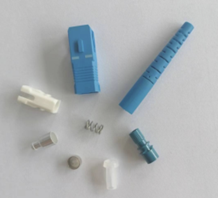
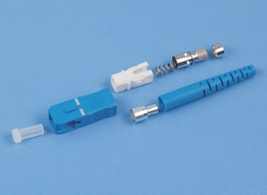
Regarding the fiber cable itself, Corning is the highest-priced brand, followed by YOFC, which is slightly more expensive than other Chinese brands. The choice of material for the cable’s core and the Kevlar or Yarn used for strength also impact cost. Kevlar is imported and offers better pull strength, while Yarn (typically sourced from China) can be used to reduce costs if high pull strength is not a requirement. For example, using yarn with fewer than three strands (1100D) can lower costs for 2.0mm cables.
Termination Process Cost
There are different grades (A-D) for the fiber jumper connector endface. To achieve a good endface quality with low insertion loss (IL < 0.1dB), higher-quality glue and longer polishing times are necessary.
The termination process also requires proper crimping of the connector to the Kevlar and cable jacket. We’ve received feedback and photos where the cable became loose from the crimp and boot, exposing the inner 0.9mm cable after installation—an issue not found in our products but others. Additionally, to ensure a professional appearance, all glue, oil, and dirt must be cleaned, and the excess Kevlar should be trimmed.
Conclusion
Each step in the fiber jumper manufacturing process has potential for cost savings, but this often results in significant differences in product quality. While some manufacturers may lower their costs by cutting corners, this often leads to issues like high insertion loss, weak terminations, or aesthetic problems.
We prioritize quality fiber jumper products tailored to your specific requirements and are committed to avoiding low-cost solutions that lead to quality complaints and arguments after delivery. We are aiming to establish long term relations not just for once business.